|
FAMSI © 2003: Michael E. Smith |
|
Postclassic Urbanism at Calixtlahuaca: Reconstructing the Unpublished Excavations of José García Payón
Research Year: 2002 Table of Contents
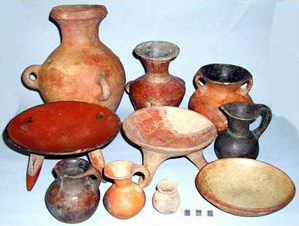
Abstract The Postclassic city of Calixtlahuaca was a power political capital in the Toluca Valley in the western portion of the State of México (Figure 1). Between 1930 and 1938, archaeologist José García Payón conducted excavations at the Calixtlahuaca archaeological site. He excavated and restored a number of large monumental structures and excavated a series of burials with rich associated offerings. Although García Payón published some of his results, he never conducted a thorough analysis of the materials nor published detailed data on the excavations or offerings. In this project I conducted an analysis of more than 1,000 ceramic vessels and hundreds of other objects from the Calixtlahuaca offerings. I searched–in vain–for García Payón’s unpublished notes and catalogs. I also analyzed Postclassic ceramic vessels from other sites in the Toluca Valley, including Teotenango and Calimaya. La ciudad posclásica de Calixtlahuaca fue la capital de un gran reino en el Valle de Toluca (Estado de México). (Figura 1). Entre los años de 1930 y 1938, el arqueólogo José García Payón llevó a cabo excavaciones en la zona arqueológica de Calixtlahuaca. Excavó y restauró algunos monumentos arquitectónicos impresionantes, y excavó varios entierros con ricas ofrendas asociadas a éstos. García Payón publicó algunos resultados de sus investigaciones, pero nunca lo hizo de manera completa y detallada. En este proyecto hice un análisis de más de 1.000 vasijas cerámicas y cientos de otros objetos de las ofrendas de Calixtlahuaca. Busqué -infructuosamente- las notas y catálogos de García Payón. También investigué vasijas cerámicas posclásicas de otros sitios en el Valle de Toluca, incluyendo Teotenango y Calimaya. Click to download the report in PDF format: The PDF files require Adobe Acrobat Reader.
Submitted 01/12/2003 by: |
||
| Return to top of page | ||
|
Text links to all pages at this site are available at the FAMSI INDEX |
||