|
FAMSI © 2005: David Tavárez |
|
Nicachi Songs: Zapotec Ritual Texts and Postclassic Ritual Knowledge in Colonial Oaxaca
Research Year: 2003 Table of Contents
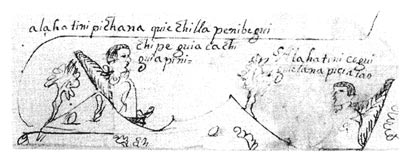
Introduction This report is based on ethnohistorical and linguistic information collected at the Archivo General de Indias (AGI) in Seville, Spain, in Spring 2003, and at five different archival depositories in Oaxaca City, Oaxaca, which were visited in the summer of 2003 and 2004–the Archivo General del Estado de Oaxaca (AGEO), the Archivo Histórico del Arzobispado de Oaxaca (AHAO), the Archivo Luis Castañeda (ALC), the Archivo de Notarías de Oaxaca (ANO), and the Archivo del Poder Judicial del Estado de Oaxaca (APJO), which houses hundreds of colonial records from the alcaldías mayores of Villa Alta (AVA) and Teposcolula (ATEP). In 2003-2004, about 85 trial records–which include wills, letters, and petitions written in Nexitzo, Bijanos, and Cajonos Zapotec, as well as a broad range of trial documents written in Spanish–were scanned at the Archivo del Poder Judicial del Estado de Oaxaca. This procedure was undertaken to facilitate the ongoing transcription and parsing of colonial Cajonos and Nexitzo Zapotec textual genres, which in turn yielded morphological, syntactic, and lexical data. These data are currently being used to assist in the translation of four booklets containing Zapotec ritual songs surrendered by town officials to Episcopal authorities in 1704. The first two booklets–henceforth AGI 882 Booklets 100 and 101–are the focus of this inquiry, as they contain a total of 22 songs that name local founding ancestors and Zapotec deities. This particular song corpus was performed during specific calendrical festivities in the Cajonos Zapotec towns of Betaza and/or Lachirioag in the 17th century. AGI 882 Booklets 102 and 103, which are also the focus of a separate translation effort, contain a total of 15 songs that celebrate a range of Christian entities and feasts. The findings presented in this report should be regarded as preliminary conclusions drawn from a work in progress, since the translation of the song corpus contained in Booklets 100 and 101 is a research task that will take several years to conclude in a satisfactory manner. This report includes a brief characterization of the ethnohistorical context of production and performance of these Zapotec ritual songs, and an appraisal of potential links between some of the deities mentioned in the songs and other known deities in the Pan-Zapotec pantheon. The research carried out so far will continue with subsequent visits to archives in México City and Oaxaca City and with further consultations with linguistic informants in Villa Alta in 2005 and 2006. Click to download the report in PDF format: Nicachi Songs: Zapotec Ritual Texts and Postclassic Ritual Knowledge in Colonial Oaxaca (480 KB) The PDF files require Adobe Acrobat Reader.
Submitted 05/29/2005 by: |
||
| Return to top of page | ||
|
Text links to all pages at this site are available at the FAMSI INDEX |
||