|
FAMSI © 2004: Ronald A. Castanzo |
|||||||||||||||||||||||||||||||||||||||||||||||||||||||||||||||||||||||||||||||||||||||||||||||||||||||||||||||||||||||||||||||||||||
Tepeaca Kiln Project
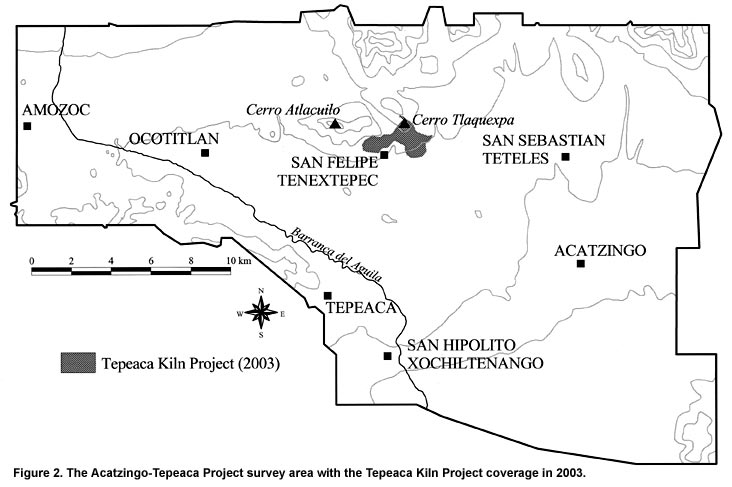
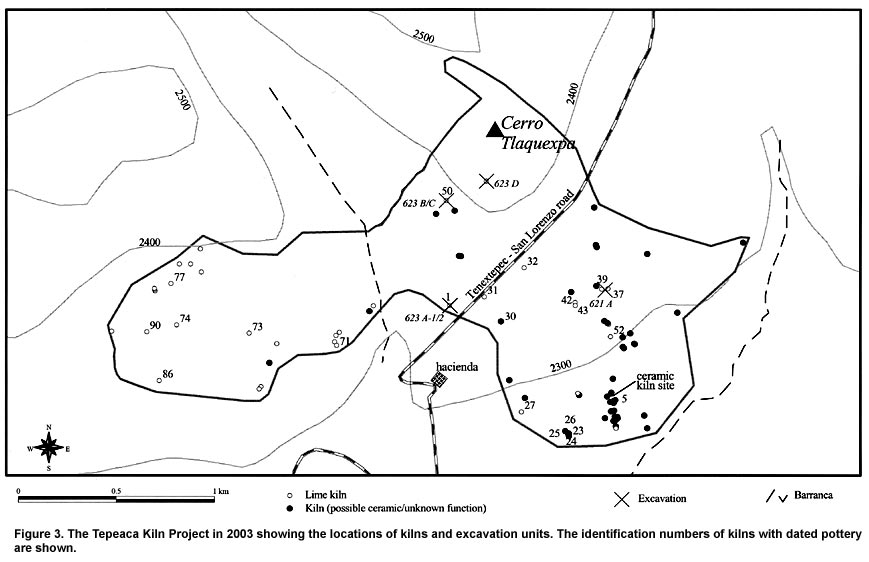
Survey A revisiting of all areas in which kilns were found in the PAT survey in the mid-1990s was found not to be feasible. Instead, efforts were focused on one area with a particularly high density of identified remains: 3.2 km2 on the southern faces of Cerro Tlaquexpa and Cerro Atlacuilo (Figure 2, shown above). Using satellite images, aerial photography, and topographic maps, all kilns located by PAT in the mid-1990s were sought out through pedestrian survey. A number of kilns could not be located in 2003, while others were found and determined not to be the remains of ancient kilns. In several instances, kiln remnants were found that were not registered by PAT, although a general survey of the area searching for here-to-fore undiscovered features was beyond the scope of the Tepeaca Kiln Project in its first season, which involved a two-person surface reconnaissance. In all, the remains of 86 kilns were found (Figure 3, shown below), of which 37 are believed to have been used in lime processing (three of these were excavated). A total of seven others is believed to be associated with Formative Period pottery production. All of the kilns were described, plotted, and, with two exceptions, photographed. In several cases, pieces of carbonized tepetate were removed for future radiocarbon dating. Ceramic and limestone samples were also taken for instrumental neutron activation analysis (INAA) at the Smithsonian Institution facility in Gaithersburg, Maryland.
With the exception of a large historic lime kiln on Cerro Atlacuilo, all of the kilns found are believed to have been pit kilns excavated directly into the underlying tepetate. Kiln remains were identified typically on the basis of sections of oxidized or carbonized tepetate ranging from perhaps just a few centimeters to the virtual entirety of the kiln rim. These prehispanic pit kilns were generally oval or circular and 1-2 m in diameter. Surface collections of ceramics were made in 24 cases (including 17 apparent lime kilns) where collections were possible and material was recovered dating to Formative, Classic, Postclassic, and Colonial times (Table 1, shown below). Dating the kilns based on small numbers of sherds was found to be problematical, however. Fortunately, the group of kilns believed to be associated with Formative Period pottery manufacturing is associated with very high densities of potsherds (hundreds per m2 in places) allowing for much firmer preliminary dating of these features.
|
||||||||||||||||||||||||||||||||||||||||||||||||||||||||||||||||||||||||||||||||||||||||||||||||||||||||||||||||||||||||||||||||||||||
|
Text links to all pages at this site are available at the FAMSI INDEX |
||||||||||||||||||||||||||||||||||||||||||||||||||||||||||||||||||||||||||||||||||||||||||||||||||||||||||||||||||||||||||||||||||||||